Step Crack in Brickwork
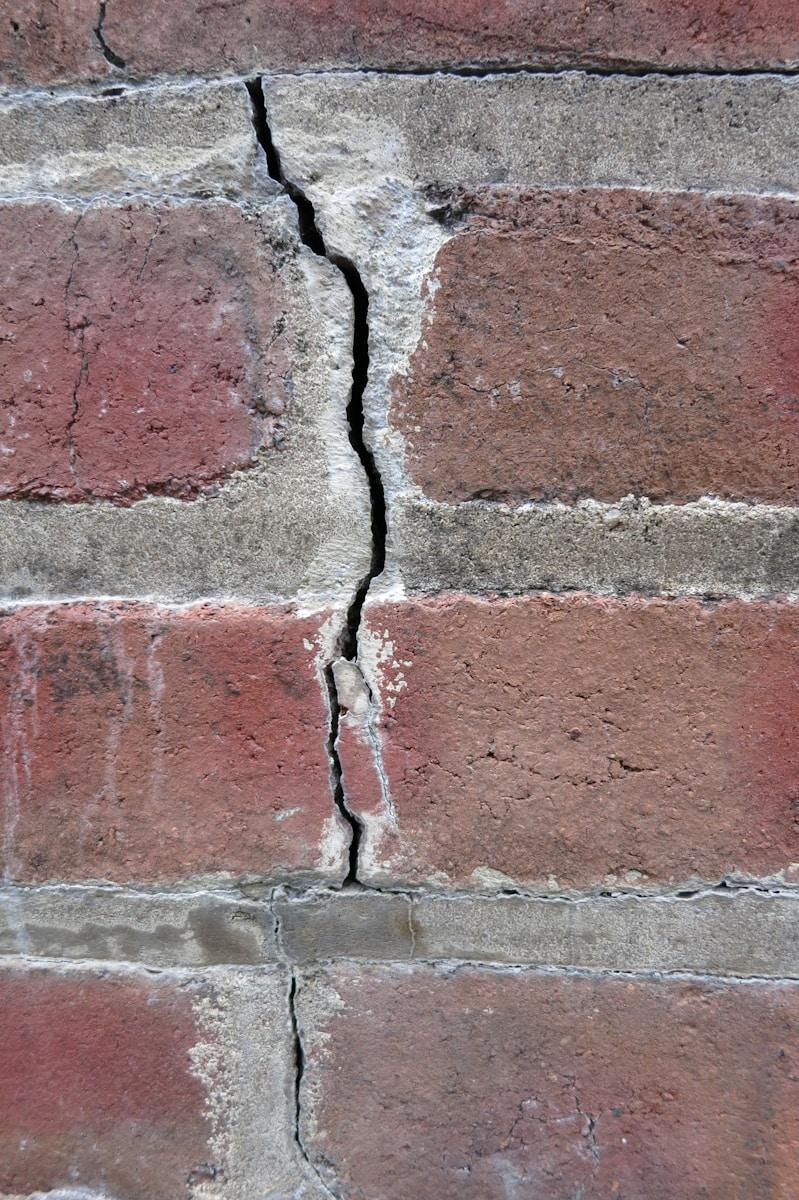
Step cracks zigzagging through your brickwork look alarming. Whether you’re in Preston, Blackburn, or anywhere across Lancashire, these diagonal patterns following mortar lines between bricks immediately raise concerns about your home’s structural integrity.
The question isn’t whether you should worry. The question is how much.
Step cracks wider than 5mm almost always indicate foundation movement. They start narrow at one end and progressively widen as they climb or descend through the wall. This tapered pattern distinguishes them from other crack types and points directly to differential settlement beneath your foundations.
Why Step Cracks Form This Pattern
Brickwork has inherent weak points. Mortar joints offer less resistance than the bricks themselves. When foundations move, stress follows the path of least resistance, creating that characteristic staircase pattern through mortar lines.
The stepped appearance reveals the direction of movement. Cracks widening as they rise suggest the foundation has dropped at the narrow end. Cracks widening downward indicate the opposite, with the upper section settling more than the lower areas.
External loads concentrate at weak points. If one corner of your foundation loses support whilst another remains stable, the structure twists. This torsional stress manifests as diagonal cracks that step through the weakest path available.
Reading the Crack Direction
Diagonal cracks running from top-left to bottom-right tell a different story than those running the opposite direction. The angle relates to which part of the foundation has dropped and how the building has twisted in response.
Cracks radiating from corners often indicate that specific corner has settled. Multiple step cracks converging on one area point to localised foundation failure. This concentration helps surveyors identify exactly where underground problems exist.
Height matters significantly. Step cracks appearing near ground level suggest foundation issues directly. Those appearing higher up might relate to wall tie failure, lintel problems, or roof spread rather than subsidence.
Measuring Step Crack Severity
Width determines urgency. Cracks under 3mm might be monitored. Those between 3-5mm need assessment. Anything exceeding 5mm requires immediate professional inspection. At 15mm or wider, you’re dealing with Category 4 damage requiring urgent repairs.
Length indicates how far the problem extends. A short stepped crack confined to one or two bricks might represent localised stress. Long cracks extending several metres show systematic foundation movement affecting large sections.
Count the steps. More steps over a given distance suggest the crack has developed gradually. Fewer, larger steps indicate more dramatic movement, possibly occurring rapidly.
Lancashire Soil Conditions
Clay soils common around Preston and Blackburn shrink dramatically during dry periods. Tree roots extract moisture, causing clay to contract. Your foundations drop into the resulting voids, creating those stepped cracks through brickwork.
Properties built on former mill sites around Lancashire often sit on made ground. This backfilled material compresses unevenly over time. Buildings in Burnley and other former industrial areas prove particularly vulnerable to settlement from inadequate ground preparation decades ago.
Coastal properties near Blackpool face different challenges. Salt-laden winds and moisture affect mortar over time. Some stepped cracking relates to mortar deterioration rather than foundation movement. Distinguishing between these causes requires professional assessment.
Internal vs External Step Cracks
Check both sides of the wall. Step cracks visible internally and externally in matching positions confirm through-wall structural damage. This affects the entire wall thickness, not just surface finishes.
External-only step cracks might indicate outer leaf problems. Cavity wall construction allows the outer brick leaf to move independently if wall ties fail. This creates impressive-looking cracks that don’t necessarily reflect foundation issues.
Internal-only cracks often affect plaster rather than brickwork. Plaster applied directly to brickwork can crack in stepped patterns without underlying brick movement. Chip away plaster at crack locations to check if bricks beneath remain intact.
Common Causes Across Lancashire
Victorian terraces throughout Lancaster and Accrington typically have shallow foundations. Built to 19th-century standards, these sit only 600-900mm deep. Modern requirements specify 1000mm minimum. Shallow foundations prove vulnerable to drought-related subsidence.
Tree roots cause significant problems. Mature trees within 20 metres of buildings on clay soil create subsidence risk. Poplars in gardens across Lancashire extract enormous moisture volumes. When clay dries and contracts, foundations drop.
Leaking drains wash away supporting soil. Old drainage systems beneath properties across the county deteriorate over decades. Water jetting from cracks erodes soil, creating voids. Foundations eventually drop into these voids, manifesting as stepped cracks above.
Testing if Cracks Are Active
Install tell-tales across major cracks. These glass or plastic strips cost £10-15 from builder’s merchants. They crack if movement continues, providing clear evidence of ongoing problems rather than historic damage.
Leave tell-tales for minimum six months, preferably twelve. Lancashire experiences significant seasonal variation. Clay soils swell in winter and shrink in summer. Full annual monitoring captures this cycle.
Photograph cracks monthly with a ruler for scale. Date every image. This visual record proves invaluable when discussing problems with insurers or structural engineers.
When Professional Help Becomes Essential
Cracks exceeding 5mm width need structural engineering assessment. At this severity, you’re beyond cosmetic repairs. Engineers determine if your property remains safe and specify necessary remedial works.
Multiple step cracks appearing simultaneously indicate systematic problems. One crack might represent isolated stress. Three or four cracks across different walls suggest foundation issues affecting the entire structure.
Rapidly growing cracks demand immediate attention. If cracks widen from 2mm to 8mm within six months, you’re experiencing active subsidence requiring urgent investigation.
Insurance Considerations
Most buildings insurance covers subsidence. Policies include ground movement clauses protecting against foundation-related damage. Step cracks from subsidence typically qualify for coverage.
Excesses for subsidence claims run high. Expect £1,000-2,500 excess on subsidence claims compared to £250 for general damage. Some policies use percentage-based excesses reaching 10% of claim values.
Insurers require evidence before authorising expensive investigations. Your tell-tale monitoring and photographs provide this evidence. Cooperate fully with insurer-appointed engineers and loss adjusters.
Repair Options and Costs
Minor step cracks under 3mm that have stabilised might need only repointing. Raking out damaged mortar and repointing costs £50-80 per square metre. This cosmetic repair restores appearance without structural intervention.
Underpinning addresses foundation problems causing step cracks. Traditional mass concrete underpinning costs £1,000-2,000 per linear metre. A typical corner requiring 6-8 metres of underpinning costs £8,000-16,000.
Resin injection provides modern alternatives. Expanding resin consolidates soil beneath foundations without excavation. This less disruptive method costs £5,000-20,000 depending on the extent of treatment needed.
Prevention for Lancashire Properties
Remove problematic trees. Large trees too close to buildings on clay soil create subsidence risk. Felling costs £500-2,000 per tree depending on size and access. This preventative action stops problems before they start.
Maintain consistent soil moisture. Water foundations during extended dry periods. This prevents clay desiccation and associated shrinkage. Simple preventative watering saves thousands in potential repairs.
Check drains annually. CCTV surveys cost £150-300 and identify leaks before they cause subsidence. Relining damaged sections costs £1,000-3,000, far less than repairing subsidence after the fact.
Regular maintenance catches problems early. Inspect brickwork twice yearly. Catching hairline cracks when they first appear allows monitoring before they develop into expensive structural issues.